The Last Real Queue: Doing UK Indie Sample Sales Right in Winter 2026
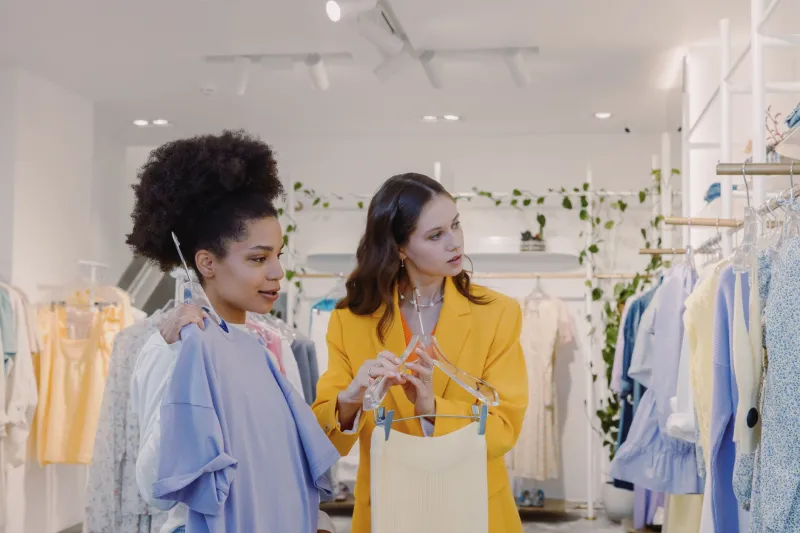
Sample sales are not shops. They are rooms. A rail gets wheeled out, a label puts a story on the door, and for a few hours the drop becomes a conversation rather than a countdown timer. In winter 2026, with so much UK indie streetwear moving through group chats and online queues, that face-to-face bit feels almost old-fashioned. It is also the best bit. You can feel the fabric, check the fit, ask the person who made it what went wrong with the sample, and decide whether the thing is actually you. The catch is that everyone else in the room is doing the same, and the whole thing only works if people remember their manners.
The queue is the first drop
You can tell a lot about a sample sale from the pavement outside. If the queue is blocking a bus stop, spilling into a loading bay or making it awkward for staff to carry boxes, someone has already got it wrong. Keep your group small. Don't hold a place for six mates who are 'five minutes away' when they are clearly still on the tram. If you are on your own, talk to the person next to you, but read the room: not everyone wants to swap Depop handles before the doors open.
The queue is also where the myths start. Someone will always say the best stuff has gone to 'friends of the brand'. Sometimes that is true, because small labels do look after the people who have supported them. Most of the time it is just a rumour passed along by someone who arrived forty minutes late and found the good hoodies gone. Either way, don't audition for a role in the drama. Congratulate the person who gets the last jacket in your size. You will survive.
Read the tag like it is a text from someone you fancy
A 'sample' tag is not one thing. It can mean a pre-production piece made to check fit, a colourway that never went ahead, a press sample that has been photographed and returned, or a second with a dodgy seam. Some labels use 'sample' loosely because it is easier than explaining the whole production run on a handwritten label. Others are precise, and the tag will tell you: sample, seconds, overrun, production sample, SMU. If it is not clear, ask.
This is not the moment to play detective and then complain later. Check the inside label, the care label, the seams and the print. Hold it up to the light. Ask whether it has been washed, worn for a shoot, or altered. A sample sale is not a normal shop, so the returns policy may be shorter or non-existent. If you need the safety net of a refund, buy new from the label's site instead. If you are happy to gamble for something that will not be remade, the sample rail is where the interesting stuff lives.
Cash, card and the £20 buffer
Most UK indie sample sales in winter 2026 will take card, but not all of them will have a signal strong enough to handle a queue. Some will prefer cash because it keeps the admin simple and the queue moving. Bring both. Bring a budget, too, and treat it like a budget rather than a suggestion. It is very easy to spend £90 in eleven minutes when there is a rail of one-offs in front of you and a playlist getting louder by the minute.
A sensible buffer is about £20. That covers the tote you did not plan to buy, the repair patch you did not know the label made, or the inevitable second look at the rail when the room clears. What it should not cover is a loud haggling performance at the till. Small labels are not market stalls. If you are buying three things and one has a visible flaw, it is fine to ask whether there is any flexibility on a bundle. It is not fine to offer half the ticket price and act like you have done them a favour. Ask once, politely, and accept the answer.
Sizing is a gamble, not a conspiracy
Samples are often made in one size, usually a medium or a UK 8, because that is what the fit model wears. That does not mean every sample will fit you, and it does not mean the label is being difficult. It means you need to know your measurements. Chest, waist, inside leg, shoulder to shoulder. If you are between sizes, buy for the fit you want rather than the label you wish you were. A boxy sample in a small can work if you check the pit-to-pit measurement. A 'large' that has shrunk in a shoot wash might not.
Ask if you can try things on over what you are wearing. Many sample sales do not have a fitting room, and that is normal. Wear a plain base layer, bring a tape measure if you are serious, and do not strip off in the middle of the room. If it does not fit, put it back on the rail properly. Someone else might love it, and the label might sell it after you leave.
The ask beats the haggle
Small labels would rather you ask than haggle. That is the whole rule. Ask what the sample is, ask if it has a flaw, ask if there is another size in the back, ask whether the fit changed for production. Ask if they are running a repair service or a swap scheme. These are good questions. They show you are interested in the clothes rather than just the discount.
What you should not do is interrogate the person at the till while there is a queue behind you. Read the room. If the label is busy, keep it short. If it is quiet, that is your moment. A good conversation at a sample sale can turn into a follow on Instagram, a heads-up about the next drop, or a repair contact when your zip gives up in February. That is worth more than the £5 you tried to knock off.
Don't be the person in the group chat
Every sample sale has one. The person who grabs from someone else's hand, hides stock under a chair, leaves a pile of maybes on the floor, or announces loudly that the prices are 'a bit much for samples'. Don't be them. If you would not do it in a normal shop, do not do it in a room full of independent designers who have spent the week labelling stock and worrying about whether anyone will turn up.
Leave with less than you planned. Buy the one piece you will actually wear, not the five you bought because the queue was long and the train was later. Sample sales are streetwear's last face-to-face drop, and they are better when everyone treats them like a shared room rather than a competition. Manners are free. The hoodie is not.